Museums, archives, galleries, and cultural institutions need more than shelves. They need storage systems that protect collections, improve access, support conservation work, and make the best use of limited square footage. At Spacesaver Storage Solutions, we design museum storage solutions that help institutions store more safely, retrieve items more efficiently, and plan for long-term collection growth.
Whether you manage paintings, textiles, archaeological materials, natural history specimens, archives, or mixed collections, our storage systems are built to support preservation and day-to-day operations without wasting valuable space.
Poor storage creates real risk for collections. Overcrowded cabinets, unstable shelving, limited aisle space, and difficult retrieval processes can increase handling damage, slow staff workflows, and make future expansion harder and more expensive.
A well-designed museum storage system helps institutions:
At Spacesaverva, we focus on storage that is practical, scalable, and tailored to the way museums actually work.
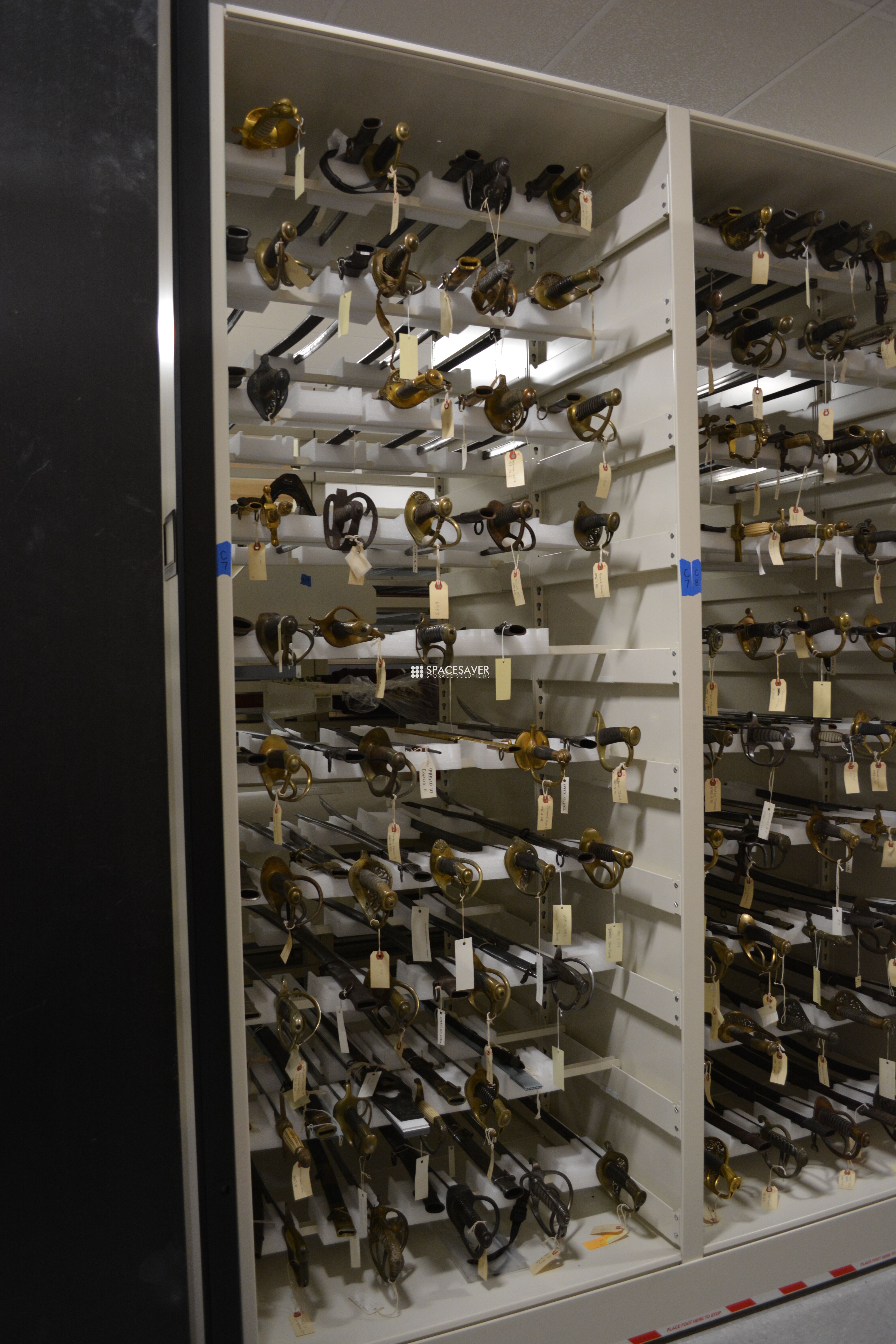
We provide storage solutions for museums that need a better balance of preservation, accessibility, and space efficiency. Our systems can be adapted for new collection centers, back-of-house renovations, collection moves, and storage upgrades.
Mobile shelving systems
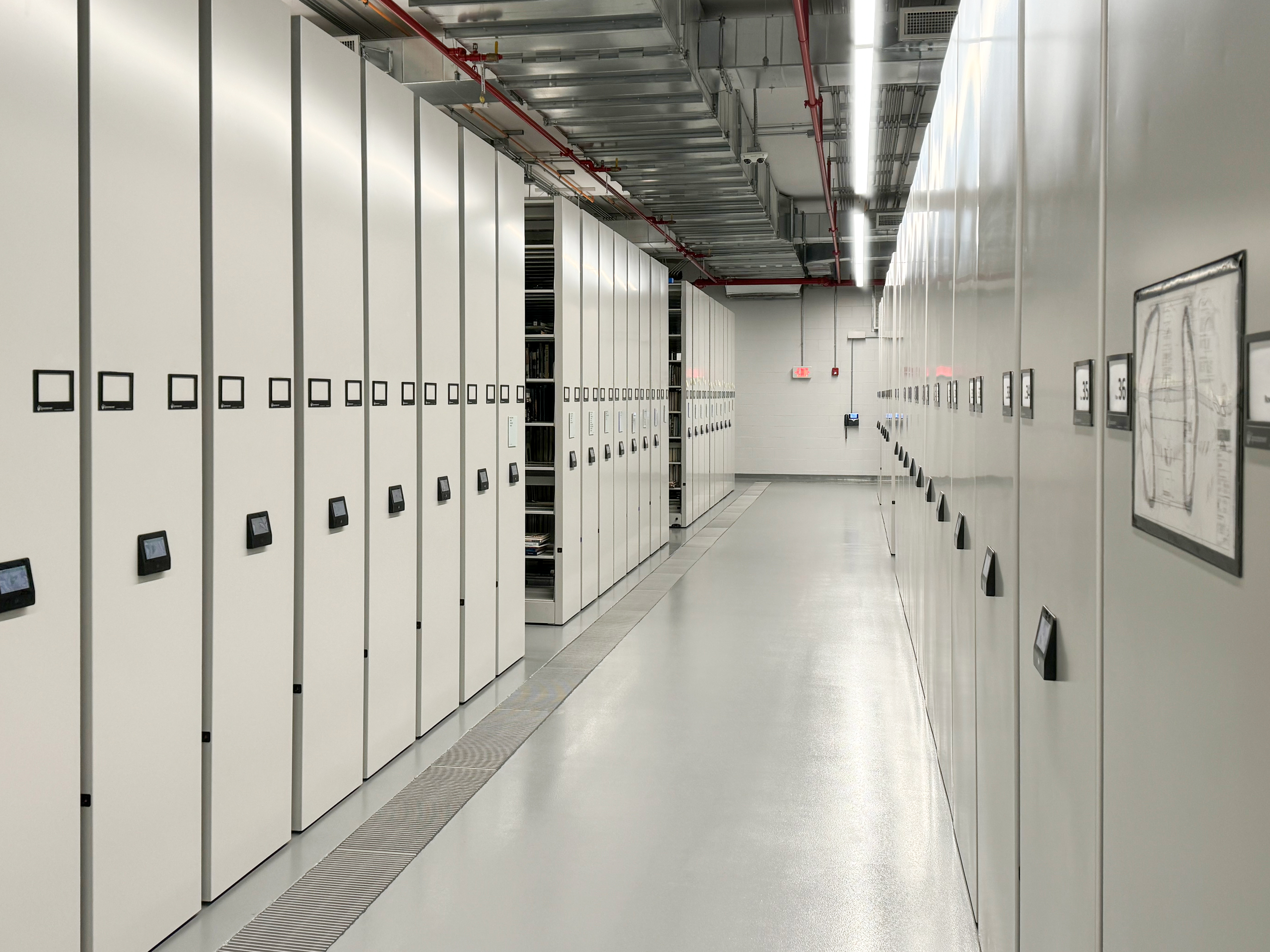
Mobile shelving is one of the most effective ways to increase museum storage capacity without expanding the building footprint. By eliminating unnecessary fixed aisles, compact mobile systems allow institutions to store significantly more collections in the same room while keeping materials secure and accessible.
Best for:
Example:
A regional museum with growing archival holdings converts a fixed-shelf room into mobile shelving. The result is increased storage density, improved organization by collection type, and easier access for collections staff.
Cabinet and drawer storage for objects
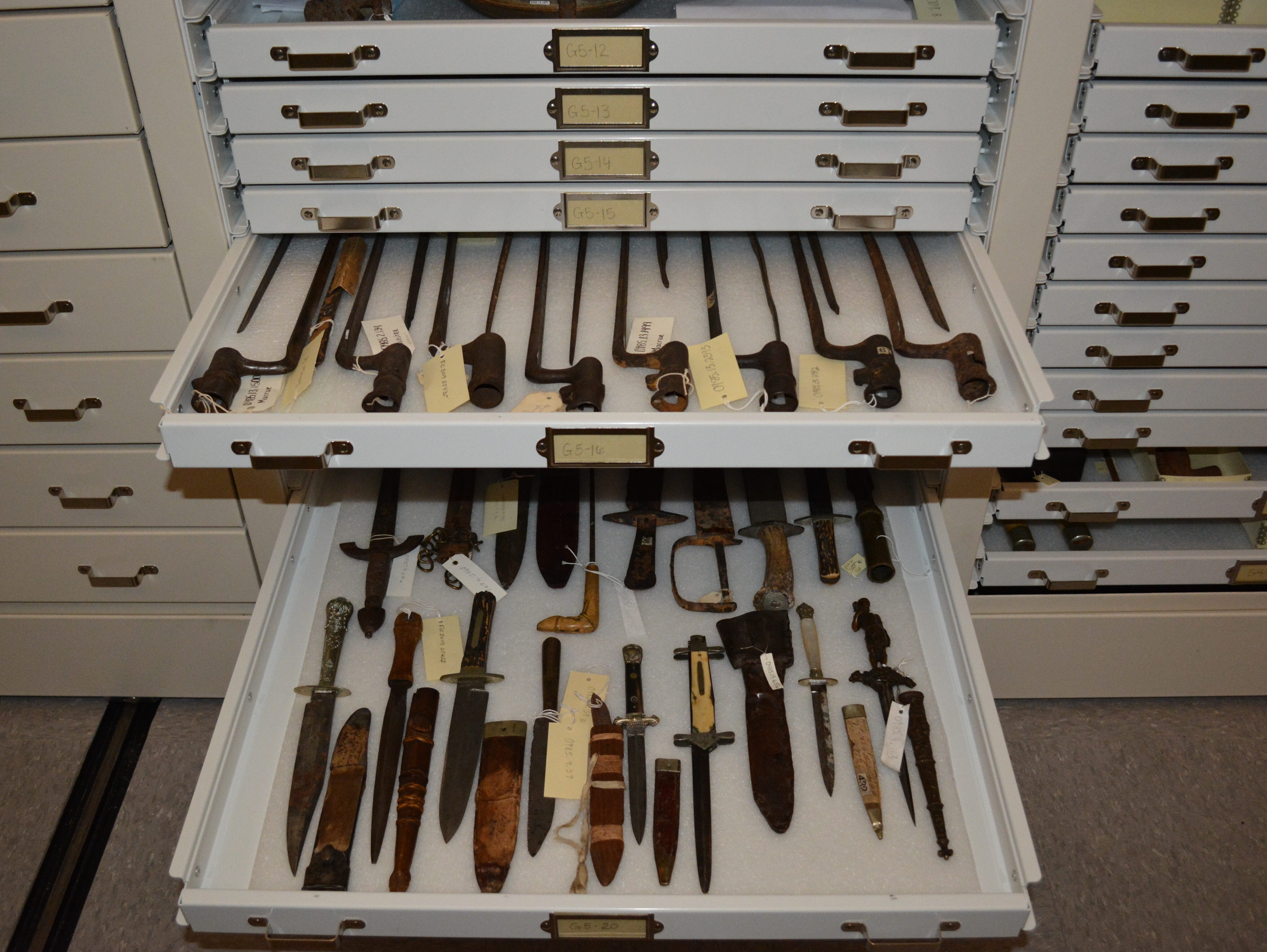
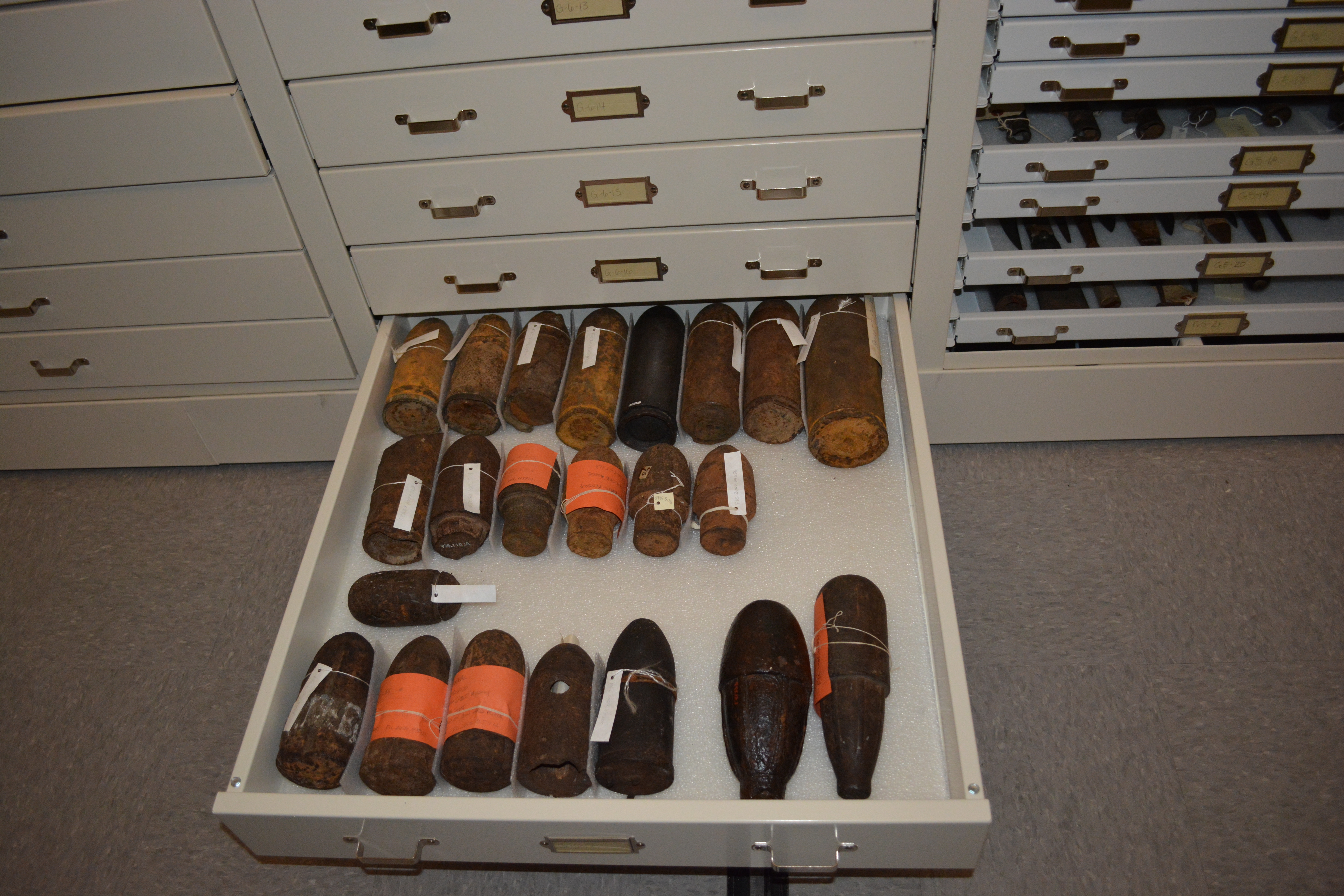
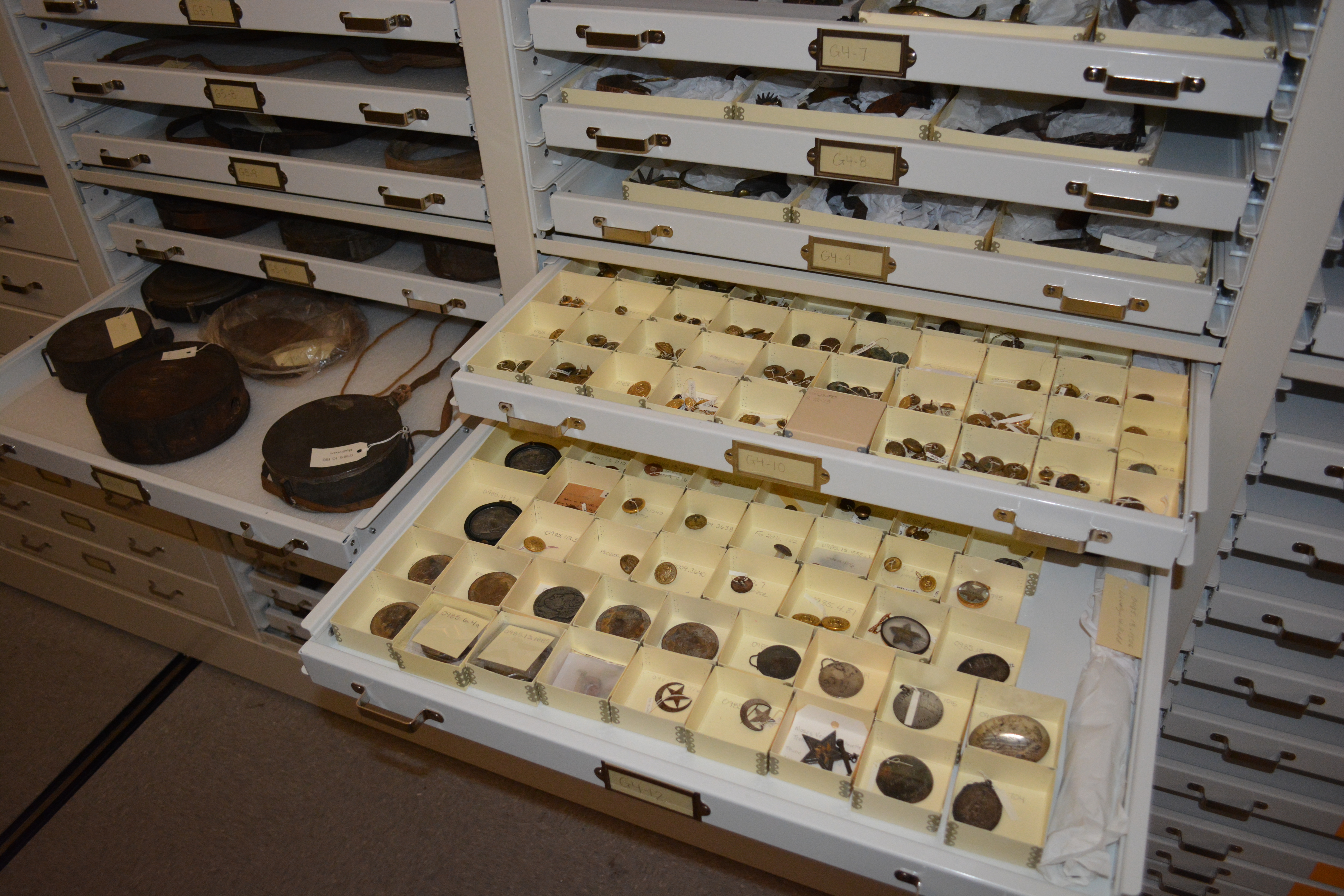
For smaller artifacts, works on paper, specimens, and sensitive collection items, cabinet-based storage provides better protection, cleaner organization, and reduced handling risk. Drawer systems can support detailed categorization and make retrieval faster for registrars and curators.
Best for:
Example:
A university museum uses compartmentalized drawers for archaeological objects and study specimens, making it easier to separate materials by excavation site, period, and condition while protecting them from dust and unnecessary movement.
Art storage for framed works and oversize pieces
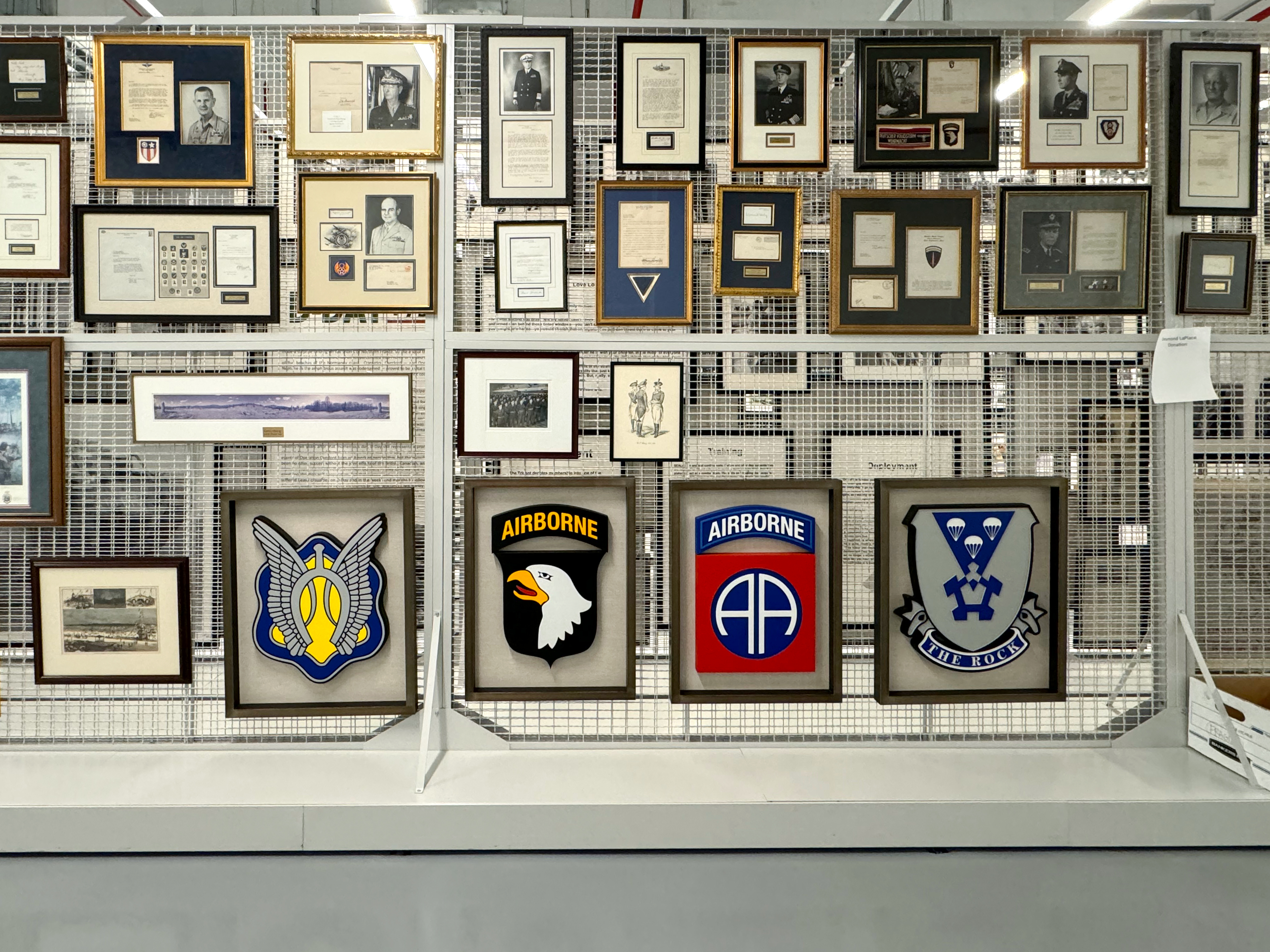
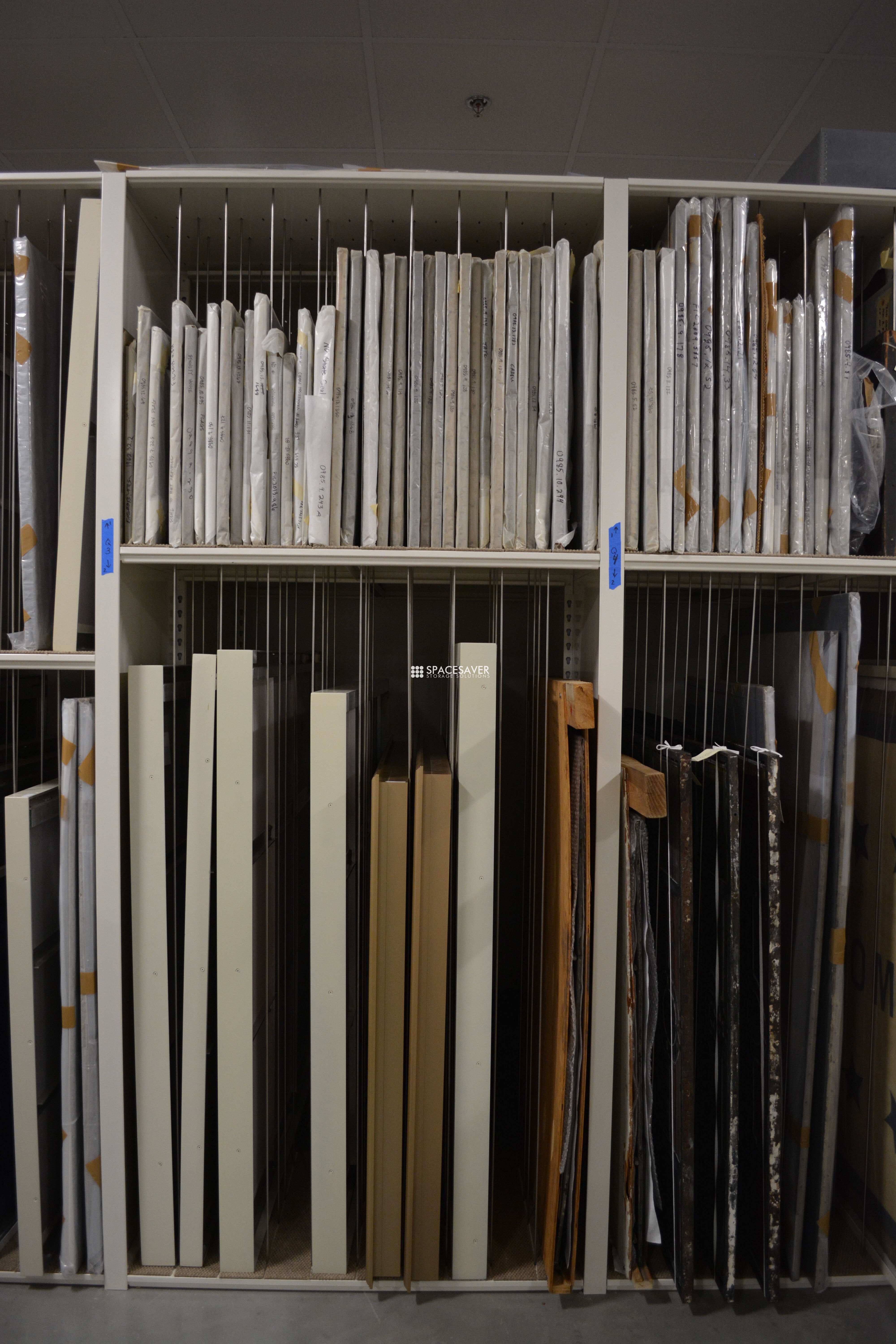
Paintings, framed artworks, and large flat objects often require specialized storage layouts. Spacesaver Storage Solutions can support vertical storage, screen systems, and space-conscious access methods that protect artwork while allowing staff to retrieve it safely.
Best for:
Example:
A city art museum replaces overcrowded wall racks with a better-organized painting storage system that improves airflow, reduces object contact, and makes rotation planning more efficient.
Textile and costume storage
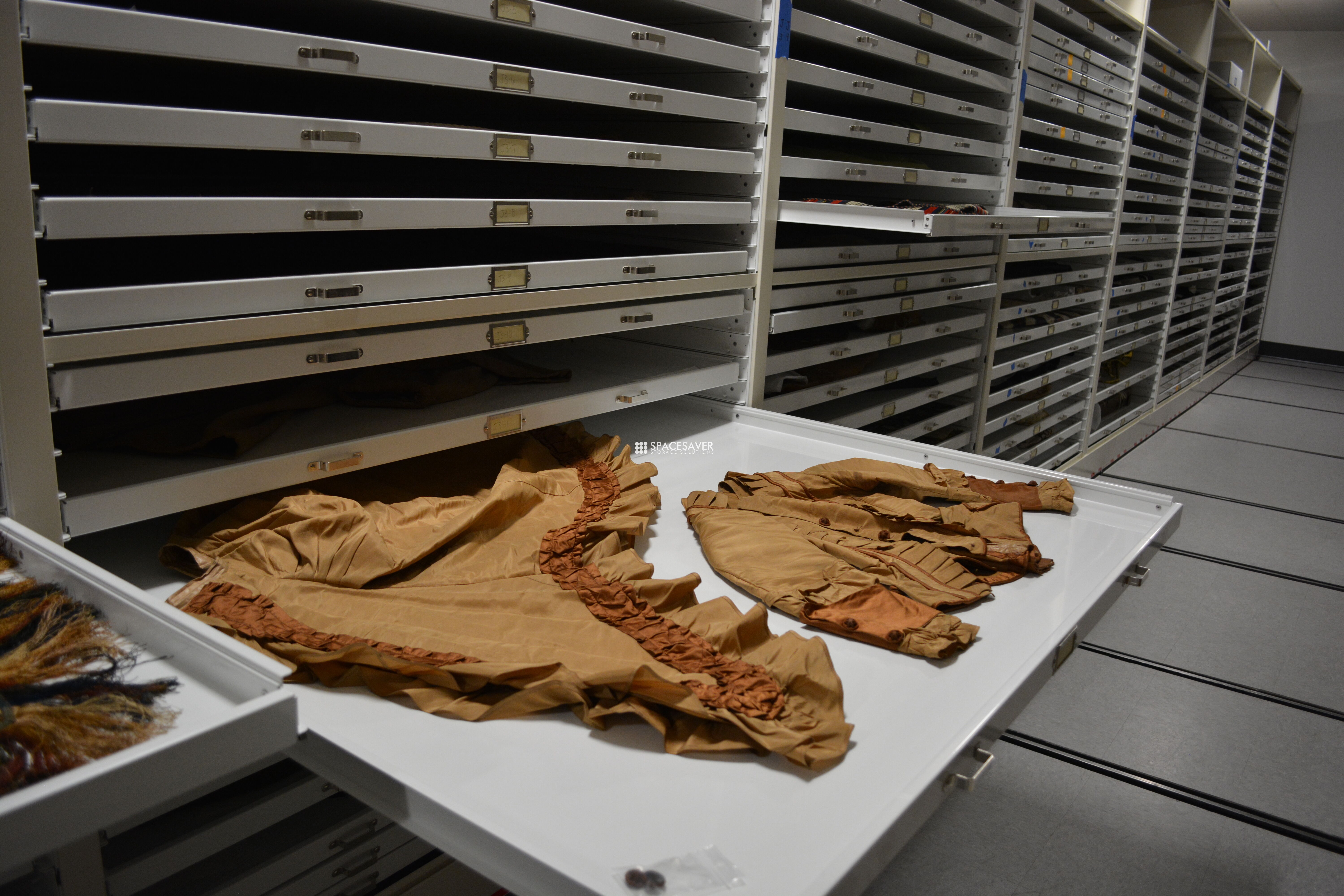
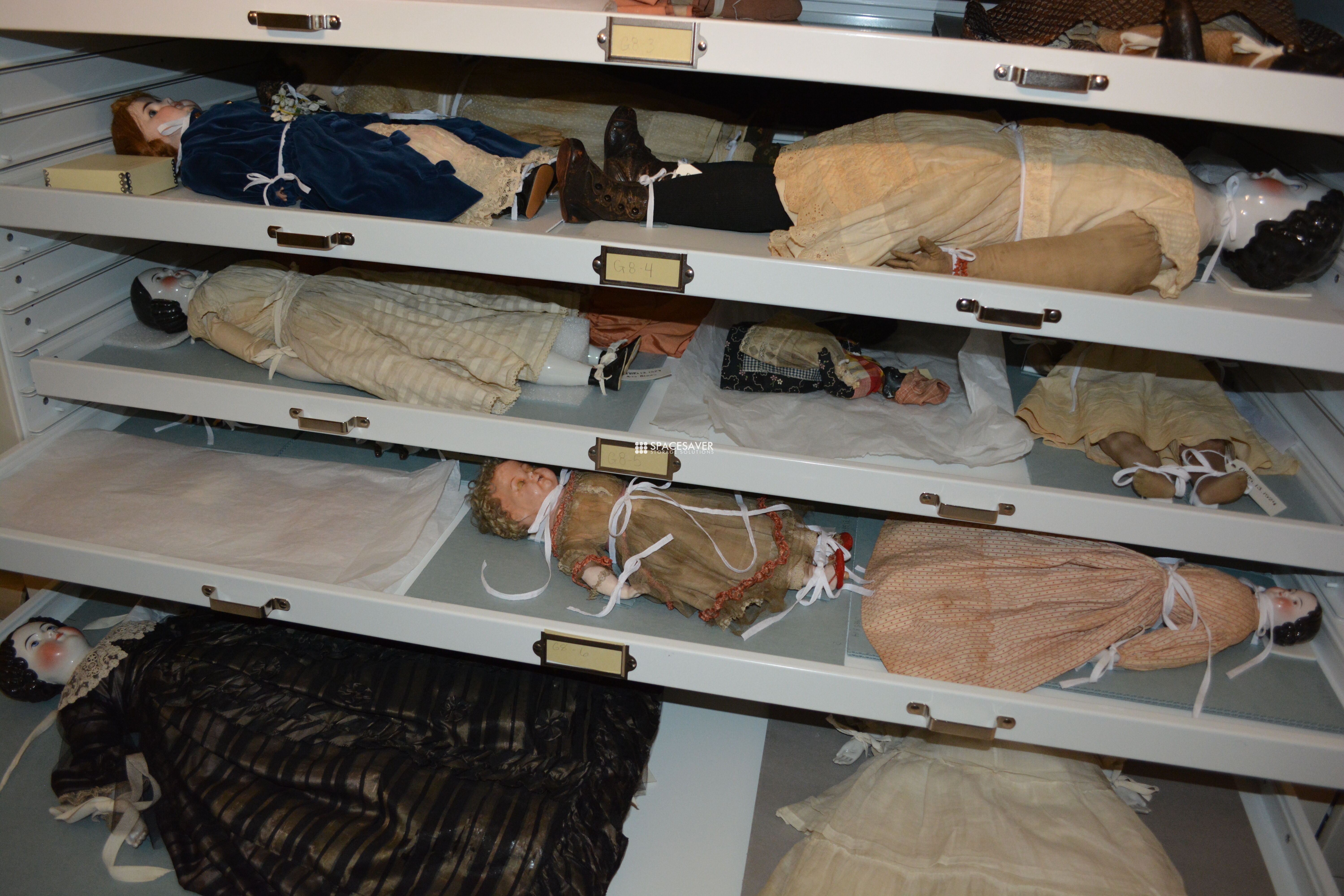
Textiles require careful storage planning to reduce crushing, distortion, dust exposure, and unnecessary handling. Our solutions can support hanging storage, flat storage, boxed storage, and room layouts that reflect conservation priorities.
Best for:
Example:
A history museum reorganizes costume storage using a combination of hanging units and flat shelving, helping staff separate fragile garments from more robust pieces and improving access for exhibition prep.
Natural history and specimen storage
Natural history collections present unique storage challenges, from dense specimen storage to the need for better compartmentalization and workflow efficiency. Spacesaver Storage Solutions systems help institutions create organized, scalable environments for long-term collection care.
Best for:
Example:
A natural history institution upgrades from mismatched shelving to a standardized storage system that improves room layout, specimen access, and long-term planning for collection growth.
Designed around your collections and your workflow
No two museums use storage in exactly the same way. A storage room serving conservation staff has different needs than one used primarily for collections access, exhibition rotation, or long-term archival retention. That is why Spacesaver Storage Solutions takes a practical approach to planning.
We consider factors such as:
The goal is not just to fit more into a room. The goal is to create a storage environment that supports the institution as a whole.
Benefits of working with Spacesaver Storage Solutions
Maximize existing space
Many museums do not have the option to build new storage areas. Our solutions help institutions make better use of current rooms, often unlocking significant extra capacity through smarter layouts and higher-density systems.
Improve collection protection
Better storage reduces overcrowding, lowers handling risk, and helps create a cleaner, more organized environment for valuable collections.
Support long-term planning
Storage should not solve only today’s problem. Spacesaver Storage Solutions helps museums prepare for future acquisitions, reorganization needs, and collection growth.
Make access easier for staff
A good storage system should make daily work easier. From retrieval to re-shelving, better organization supports smoother operations across departments.
Museum storage applications
Spacesaver Storage Solutions supports a wide range of cultural and collecting institutions, including:
Common museum storage challenges we solve
Institutions often come to us with issues like:
Our team helps identify practical storage improvements that align with preservation needs, staff use, and space limitations.
Example project scenarios
Scenario 1: Archive room capacity problem
A museum archive is at capacity, with records, boxed photographs, and library materials spread across multiple rooms. Spacesaver Storage Solutions recommends compact mobile shelving to consolidate materials into one organized storage area and improve access for collections staff.
Scenario 2: Mixed collection storage upgrade
A local museum has history objects, textiles, and framed works sharing one back-of-house space. Spacesaver Storage Solutions develops a more efficient layout using specialized zones for hanging garments, object cabinets, and art storage, reducing overlap and improving handling safety.
Scenario 3: New collections center planning
A growing institution is planning a new storage facility and needs flexible systems that can adapt over time. Spacesaver Storage Solutions helps create a scalable storage plan that supports current collections while allowing room for expansion.
Why institutions choose Spacesaver Storage Solutions
Spacesaver Storage Solutions understands that museum storage is not just about capacity. It is about stewardship, access, efficiency, and trust. Collections teams need solutions that support preservation standards while still working in real operational environments.
Our museum storage solutions are built to help institutions:
Talk to Spacesaver Storage Solutions about museum storage solutions
If your institution needs better museum storage, Spacesaver Storage Solutions can help you create a safer, more efficient, and more adaptable collection environment.
Contact Spacesaver Storage Solutions to discuss storage solutions for archives, artifacts, artwork, textiles, specimens, and mixed collections.